Use weather-suitable construction
A welded steel outdoor stove is better suited to changing temperatures and exposed conditions than a lightweight decorative heater or an appliance intended only for indoor use.


A practical guide to choosing a suitable outdoor stove, planning the chimney route and creating a safer, warmer covered garden seating area.
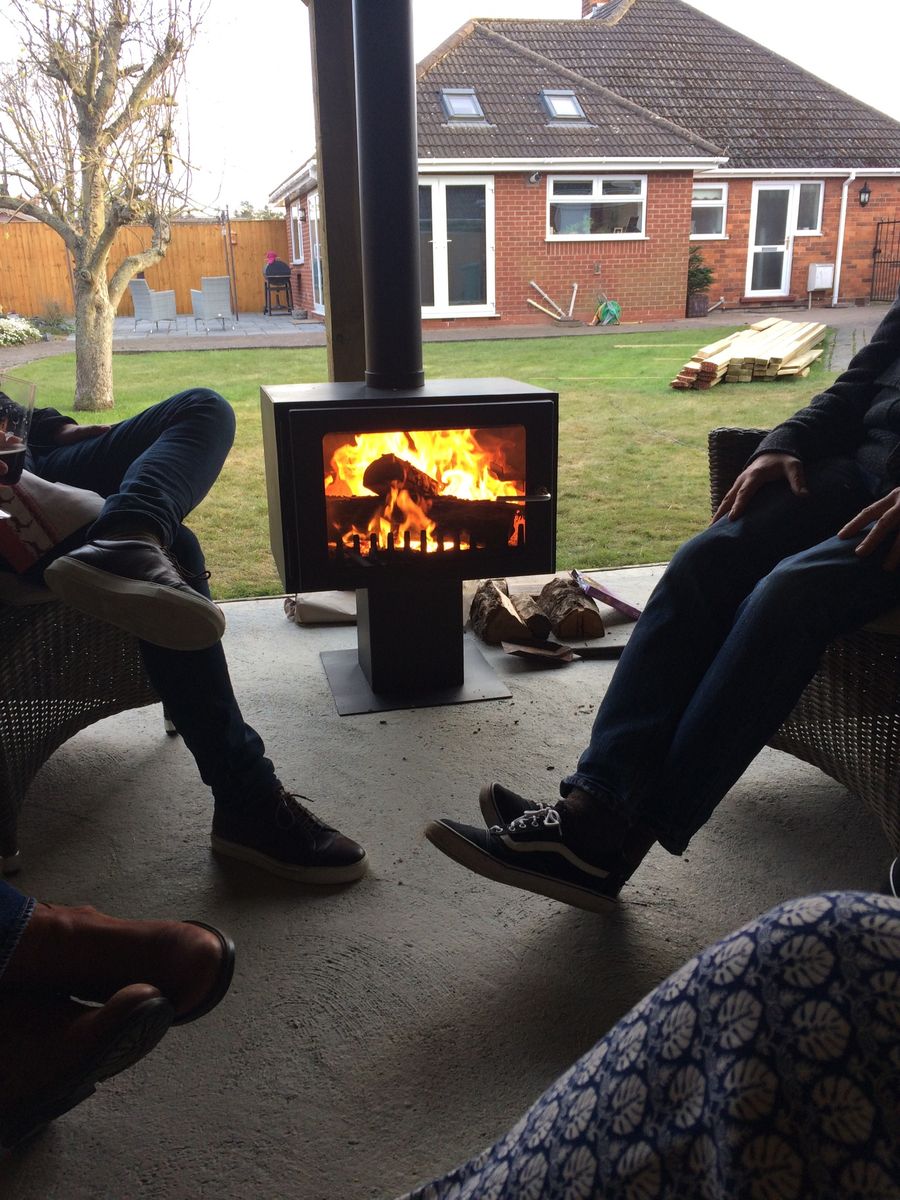
A log burner can be used in some gazebos, pergolas and covered outdoor seating areas, but the stove and chimney must be selected for the individual structure.
Roof material, timber framing, open sides, prevailing wind, seating position and chimney support all affect the design. A decorative indoor stove should not simply be moved outside and connected to a short pipe. For most exposed garden settings, a robust steel outdoor stove with a configurable chimney is the more suitable choice.
The aim is not only to create heat. The installation must also discharge smoke safely, keep hot surfaces away from combustible materials, protect the floor from heat and embers and remain stable in poor weather.
A gazebo loses heat far more quickly than a sealed room, so indoor room-sizing calculations are rarely a useful starting point.
A welded steel outdoor stove is better suited to changing temperatures and exposed conditions than a lightweight decorative heater or an appliance intended only for indoor use.
Even a light breeze can carry heat away. Choose the output around the size and openness of the seating area rather than applying a standard indoor room calculator.
Measure the proposed route and identify every required length, elbow, support, transition, flashing and terminal before selecting the final stove configuration.

The safest and neatest installations are planned from the chimney terminal down to the stove, not improvised from the stove upwards. Confirm the complete route while every component can still be moved.
The best route is normally the one that is shortest, well-supported, easy to inspect and least affected by nearby roof sections or turbulent air.
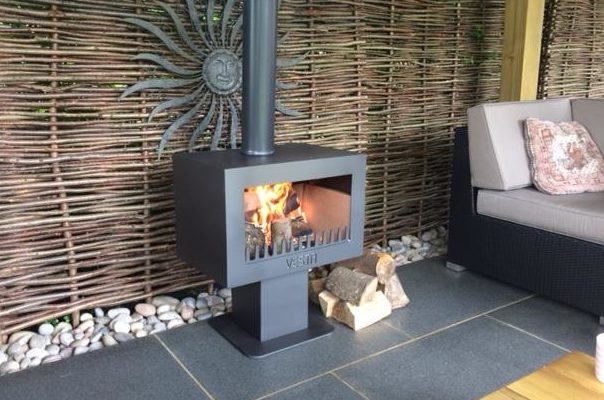
A vertical route usually gives the most direct chimney path but requires a correctly specified roof penetration, insulated components, clearances and a weatherproof flashing system.
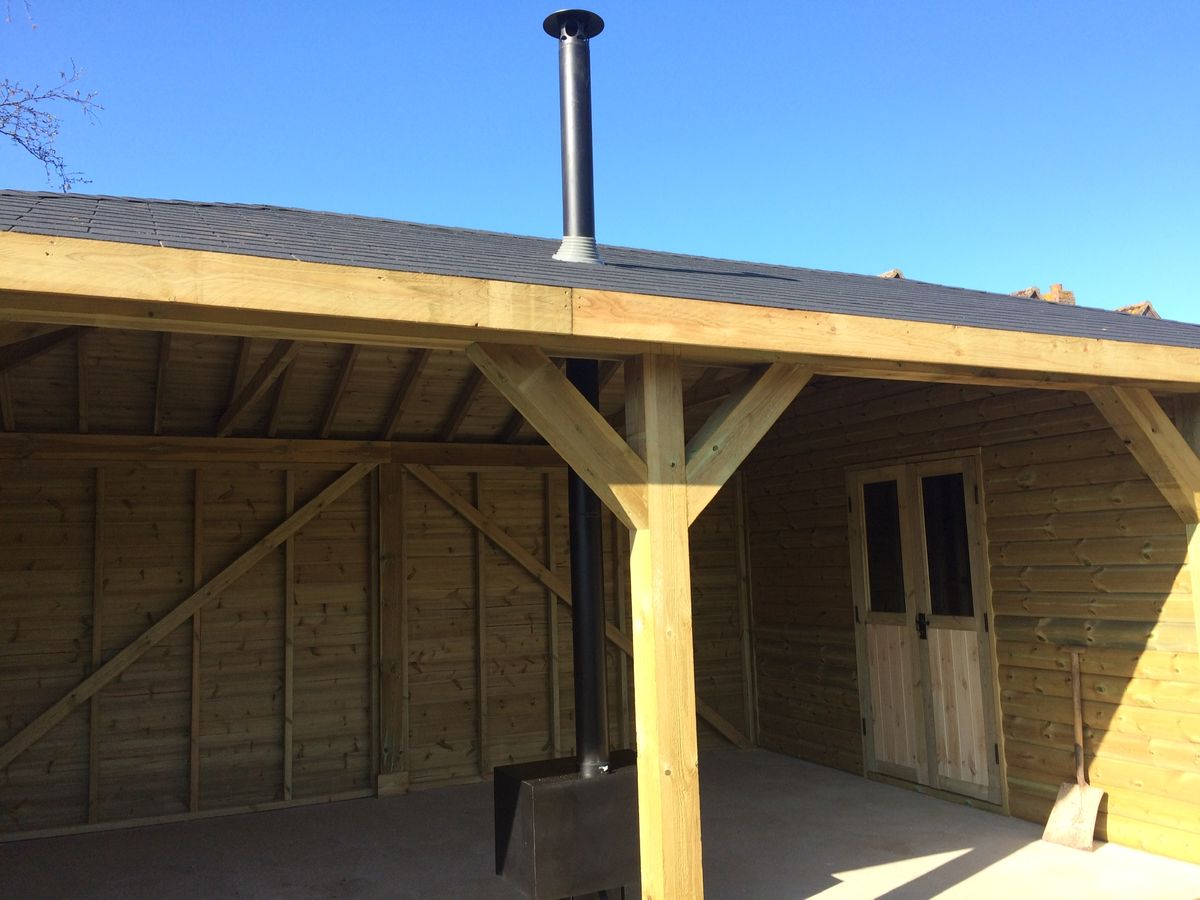
An offset or swan-neck route can avoid cutting the gazebo roof. It uses matched elbows and suitable brackets to return the chimney to a supported vertical position.
Use this as a sequence for planning and discussing the installation. Component dimensions and clearances must come from the actual stove and chimney instructions.
Choose a level location that keeps the hot body and loading area clear of timber posts, wall panels, curtains, furniture and busy walkways. Protect combustible decking or flooring with a correctly sized non-combustible base.
Use a plumb line or laser to check the chimney centreline. Inspect above and below the roof for joists, rafters, cables, lighting and other obstructions before making an opening.
The opening must suit the tested insulated chimney system and maintain its stated distance from combustible materials. Do not use a generic hole size taken from another installation.
Fit the specified connecting pipe, adaptor, insulated sections, locking bands and support components in the correct orientation. Do not mix incompatible flue brands or improvise joints.
Fit a flashing approved for the roof material and chimney temperature, then add the required weathering components and terminal. Check that water cannot track through the opening or down the outside of the flue.
Recheck every clearance, locking band, bracket and roof seal. Confirm that smoke can discharge safely and that a suitable carbon monoxide alarm is fitted where required before curing the stove in accordance with its instructions.
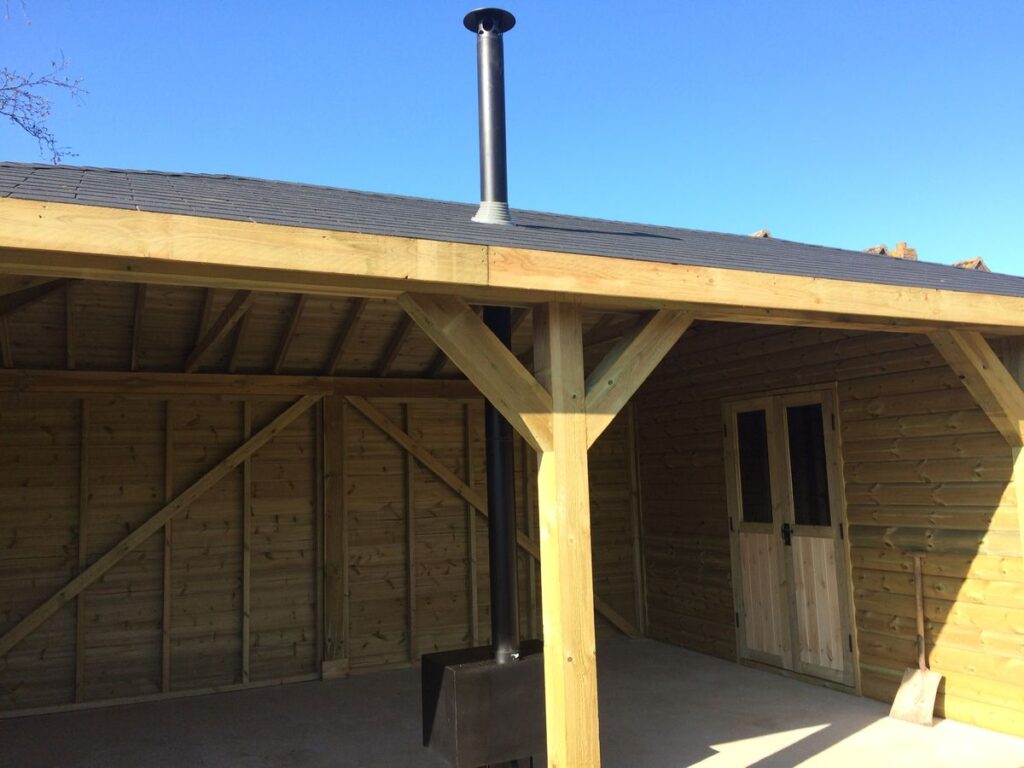
An offset system can be useful where the gazebo roof should not be cut or where a straight route is blocked by structural timber. The elbows should create a controlled offset before the chimney returns to vertical.
These installations show how the stove position, chimney route and surrounding structure can vary from one project to another.
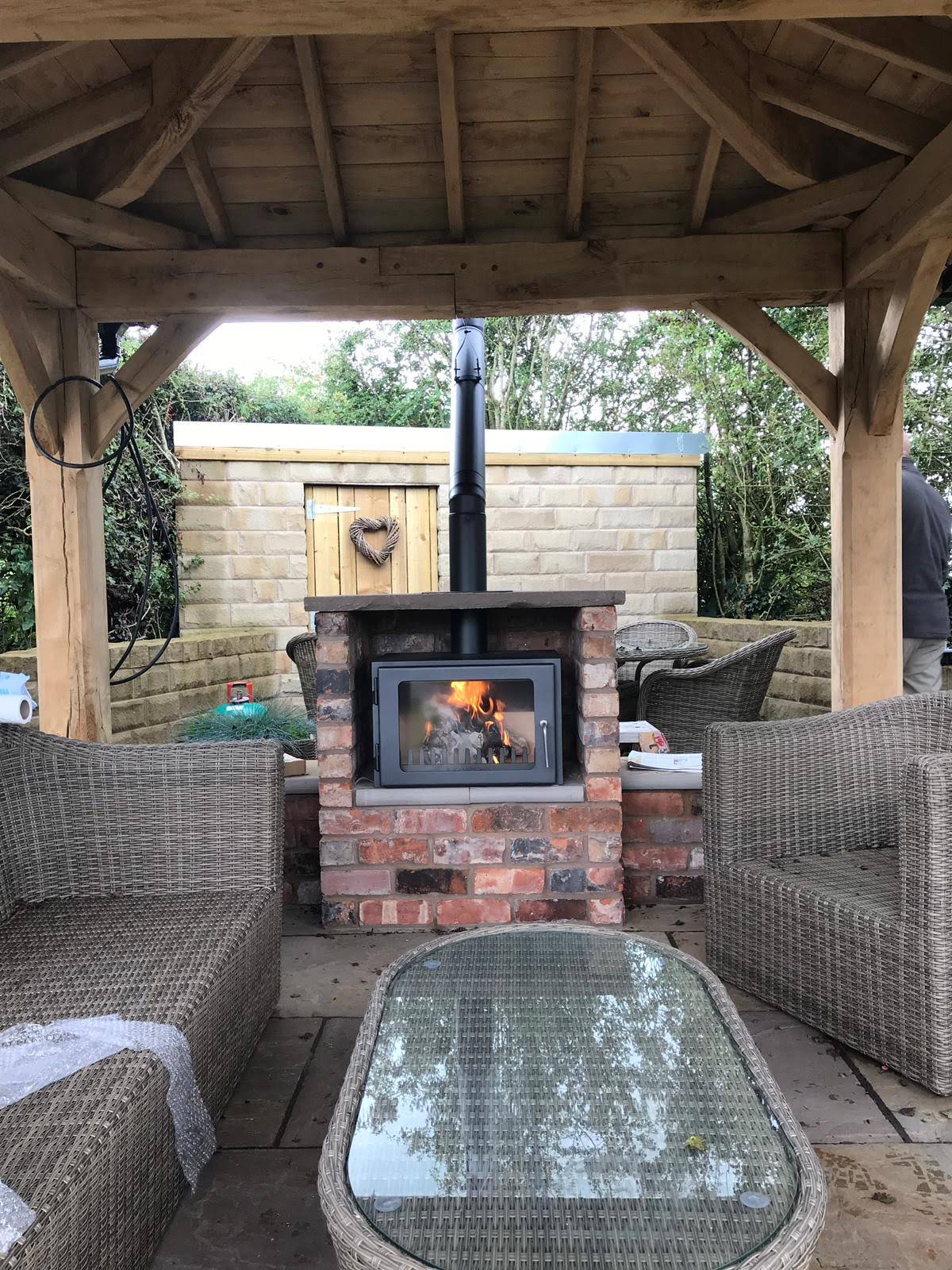
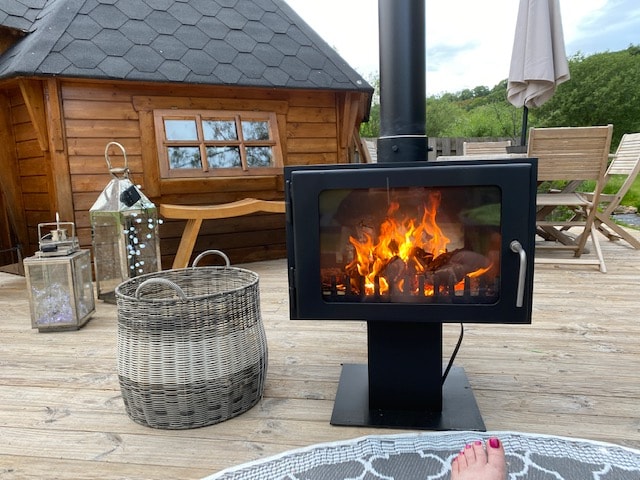
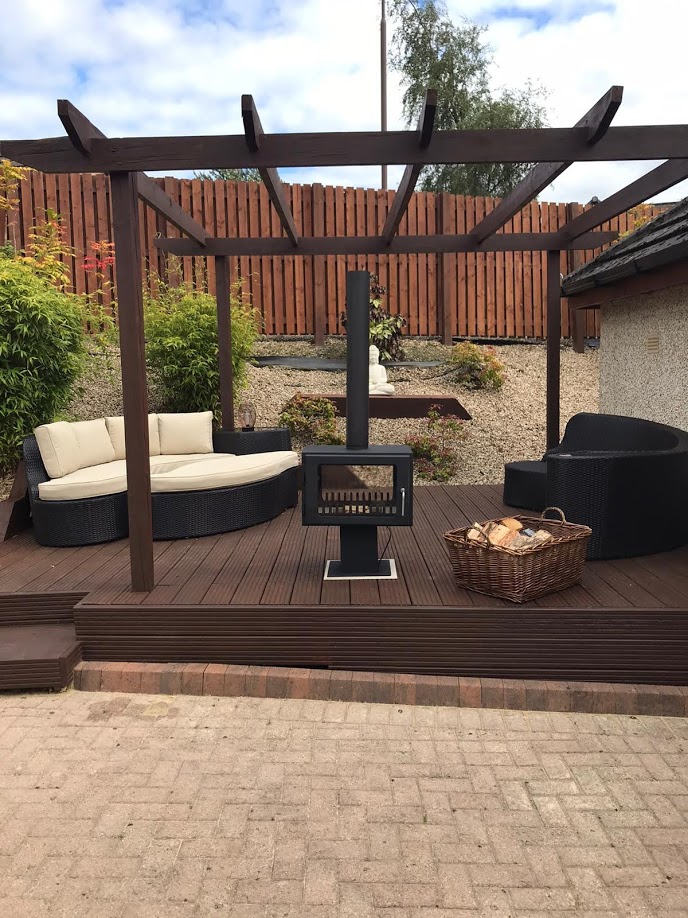
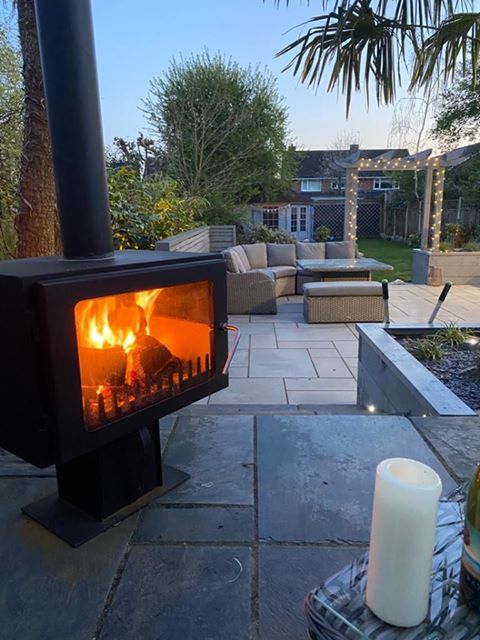
A well-planned installation still needs the correct fuel and regular inspection to keep it working safely.
Use clean, untreated firewood with a moisture content of 20% or less. Wet logs produce less useful heat, more smoke and greater deposits in the chimney.
Never enclose the gazebo so tightly that the stove lacks combustion air or smoke can accumulate. Consider how temporary screens and curtains change ventilation.
Inspect joints, brackets, the terminal and roof seal regularly. Arrange cleaning at a frequency appropriate to how often the stove is used and the fuel being burned.
Keep children, pets, furniture and stored logs away from hot surfaces. Never leave a lit outdoor stove unattended or use it during unsafe weather conditions.
See the stove, chimney choices, glass-door options and outdoor cooking accessories.
Explore insulated chimney components for installations near combustible structures.
Compare practical gazebo heating options before choosing your appliance.
Compare Vesta garden wood burners, pergola heaters and camping stoves.
Answers to the questions customers commonly ask before fitting an outdoor log burner beneath a gazebo or pergola.
Vesta Stoves manufactures the Fiesta Garden Stove in Lancashire and can help you identify the flue lengths, elbows and supports likely to suit your proposed covered outdoor area.
We use necessary cookies to make our website and online shop work. With your permission, we also use analytics cookies to understand how visitors use the website and marketing cookies to measure advertising. You can accept all cookies, reject non-essential cookies or manage your preferences. Read our Cookie Policy .
Choose which optional cookies we may use. Necessary cookies remain active because they support essential shopping, checkout, security and preference functions.