

Outdoor log burner fuel guide
Best Wood for an Outdoor Log Burner: A Practical UK Guide
The species matters, but dryness matters more. Learn which logs produce lasting heat, how to check moisture correctly and what should never go into your garden stove.
Start with the important part
Dry wood gives you more useful heat and less smoke
Wet logs waste a large part of the fire’s energy boiling off water. They are harder to light, produce more smoke, create more deposits and give noticeably less useful heat. For an outdoor log burner, that means a sluggish fire and more smoke drifting around the seating area.
Aim for 20% moisture or less. In England, firewood sold in volumes below two cubic metres must be certified as Ready to Burn, confirming that it meets the required moisture standard.
Below 20% moisture
The most important figure when selecting logs for immediate use.
Clean and untreated
Never substitute construction waste, painted timber or old furniture.
Split to suit the stove
Logs should fit comfortably without being forced against the door or lining.
Heat, ignition and burn time
Hardwood vs softwood: which is better?
Hardwood is not automatically “good” and softwood is not automatically “bad”. Both can burn well when properly dried. Their density and the size of the split logs determine how they behave in the fire.
Hardwood
Dense hardwood normally burns for longer and produces a steadier bed of embers. It is the better choice once an outdoor stove is established and you want lasting heat through the evening.
- Longer burn from an equivalent-sized log
- Strong ember bed
- Good for sustained evening heat
Softwood
Dry softwood lights easily and burns more quickly. Small splits are excellent for kindling and bringing the stove up to temperature, but larger quantities usually need replenishing more frequently.
- Easy to ignite when dry
- Useful for kindling and fast heat
- Usually burns faster than dense hardwood
Common firewood in Britain
Good woods for an outdoor log burner
Buy on moisture content and quality first, then consider the species. A dry softwood log will normally burn better than a wet oak log.
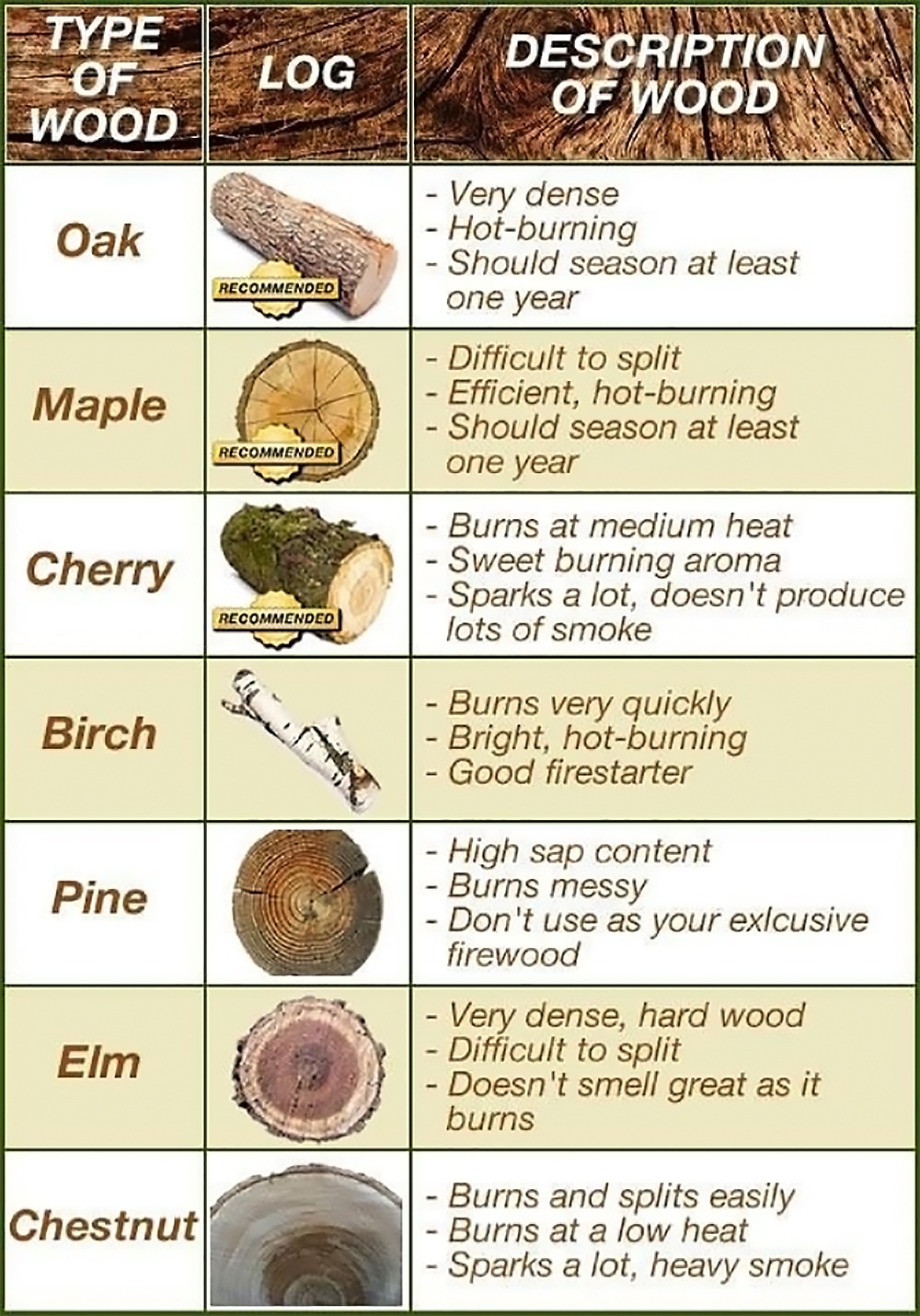
| Wood | How it burns | Best use |
|---|---|---|
| Ash | Reliable heat, good flame and straightforward burning when dry. | Excellent general-purpose firewood. |
| Beech | Dense, steady and capable of producing a strong bed of embers. | Longer evening burns. |
| Oak | Slow and long-lasting once fully seasoned, but can be disappointing when insufficiently dry. | Sustained heat after the stove is established. |
| Birch | Lights readily, gives an attractive flame and burns faster than oak or beech. | Starting and building a lively fire. |
| Sycamore | Good all-round firewood that seasons reasonably well when split and stored correctly. | Everyday outdoor burning. |
| Dry conifer | Quick ignition and fast heat, but normally a shorter burn. | Kindling and initial warm-up. |
Measure—do not guess
How to check whether firewood is dry enough
The most reliable check is a firewood moisture meter. Split a representative log and test the freshly exposed inner face rather than the dry outside surface. Check several logs from different parts of the stack.
- Target a reading of 20% or less
- Test the freshly split centre of the log
- Check several logs, not only one convenient piece
- Keep stored logs protected from rain after testing
Cracked ends, loose bark, reduced weight and a clearer sound when two pieces are struck together can suggest dryness, but these signs are not as dependable as a correctly used meter.
Keep dry wood dry
How to season and store firewood properly
Freshly felled timber can take a long time to reach a suitable moisture level. The species, log diameter, how soon it is split, airflow and local weather all affect the drying period. Do not rely on a fixed number of months—measure the finished logs before burning.
Split early
Splitting exposes more surface area and allows moisture to escape faster than leaving timber in large rounds.
Raise the stack
Use a slatted base or pallet so the bottom course does not absorb moisture from the ground.
Protect the top
Keep direct rain off while leaving the sides open enough for air to circulate through the stack.
Protect people, neighbours and the stove
What should never be burned
An outdoor stove is not an incinerator. Burning waste can release harmful fumes, cause excessive smoke and damage the stove or chimney.
Never burn:
- Painted, stained, varnished or pressure-treated timber
- MDF, chipboard, plywood, laminate or furniture
- Construction offcuts of unknown treatment
- Plastics, household rubbish or packaging
- Driftwood or salt-contaminated timber
- Wet, green or visibly rotten wood
- Large quantities of cardboard or printed material

Cleaner, stronger outdoor fires
How to get better performance from your logs
- Use dry kindling and an appropriate firelighter to establish the flame
- Build the fire gradually instead of filling a cold stove with large logs
- Maintain enough airflow for active combustion
- Add larger hardwood only after the chimney is drawing properly
- Avoid allowing the fire to smoulder for long periods
- Do not overload the fire chamber
- Consider wind direction and nearby neighbours before lighting
If the fire is persistently smoky despite dry fuel, allow it to go out safely and check the air supply, chimney and fuel arrangement before using it again.
Cheshire & North West customers
Buying a garden stove locally?
For eligible addresses in our local delivery area, selected Vesta garden stoves and pergola heater kits can be delivered directly from our Lancashire workshop in the Vesta Stoves vehicle. Normal website delivery charges apply.
Looking for a substantial outdoor log burner?
The British-made Fiesta Garden Stove combines a firebrick-lined chamber, heavy-duty Corten steel construction and configurable doors, chimney parts and cooking accessories.