

Gazebo heating advice from a UK stove manufacturer
What Is the Best Way to Heat a Gazebo?
The best gazebo heater depends on how open the structure is, whether mains electricity is available and how long you want the heat to last.
Infrared heaters are convenient for instant spot heating. For longer evenings in an open or well-ventilated gazebo, a purpose-built outdoor wood-burning stove can provide strong radiant heat, atmosphere and off-grid operation.
The Fiesta Garden Stove is Vesta's dedicated outdoor wood-burning option for customers who want a permanent focal point rather than a portable heater.

Start with the structure
Choose a heater that matches your gazebo
An open-sided timber gazebo behaves very differently from a fully enclosed garden room. Ventilation, roof construction, nearby combustible materials and the proposed flue route all affect which heating method is suitable.
Radiant heat works best
Moving air carries warm air away quickly. Position the heat source so radiant warmth reaches the seating area directly.
Ventilation becomes critical
Curtains, screens and side panels retain heat but can also change the ventilation requirements. Do not close a structure around a combustion appliance without assessment.
Treat it as a building project
An enclosed gazebo may require a site-specific stove, flue, hearth, ventilation and compliance assessment rather than a general outdoor-heater solution.
Gazebo heater comparison
Electric, gas, infrared or wood-burning stove?
Each option suits a different type of space and pattern of use. The table below gives a practical starting point.
| Heating option | Best suited to | Main advantages | Points to consider |
|---|---|---|---|
| Electric infrared heater | Occasional use and direct seating-area warmth | Instant heat, simple controls and low maintenance | Needs a suitable electrical supply and fixed positioning |
| Gas patio heater | Portable heating for short social occasions | Quick to start and easy to reposition | Requires gas cylinders, storage and regular replacement |
| Fire pit or chiminea | Open garden areas where atmosphere matters most | Simple, social and visually appealing | Open flames, sparks and less controlled heat direction |
| Outdoor wood-burning stove | Longer evenings in an open or properly ventilated gazebo | Radiant heat, enclosed firebox, ambience and off-grid use | Needs suitable positioning, clearances, hearth and flue planning |
This comparison is general guidance. Always assess the individual structure and follow the heater manufacturer's instructions.
Vesta's recommended outdoor stove route
When the Fiesta Garden Stove is the right choice
The Fiesta is designed as an outdoor wood-burning stove rather than an indoor appliance placed outside. It is intended for customers who want a substantial heat source and a permanent feature for a gazebo, pergola, patio or outdoor entertaining area.
It will not be the best answer for every gazebo. A small space used for ten minutes at a time may be better served by an infrared heater. The Fiesta becomes more compelling when the space is used regularly, mains power is inconvenient and the appearance of a real fire is part of the experience.
- Purpose-built outdoor stove format
- Enclosed firebox rather than an exposed fire
- Radiant heat for open and semi-open spaces
- Operates without an electrical supply
- Optional configurations and accessories
- Direct support from the UK manufacturer
Need a roof-exit flue package?
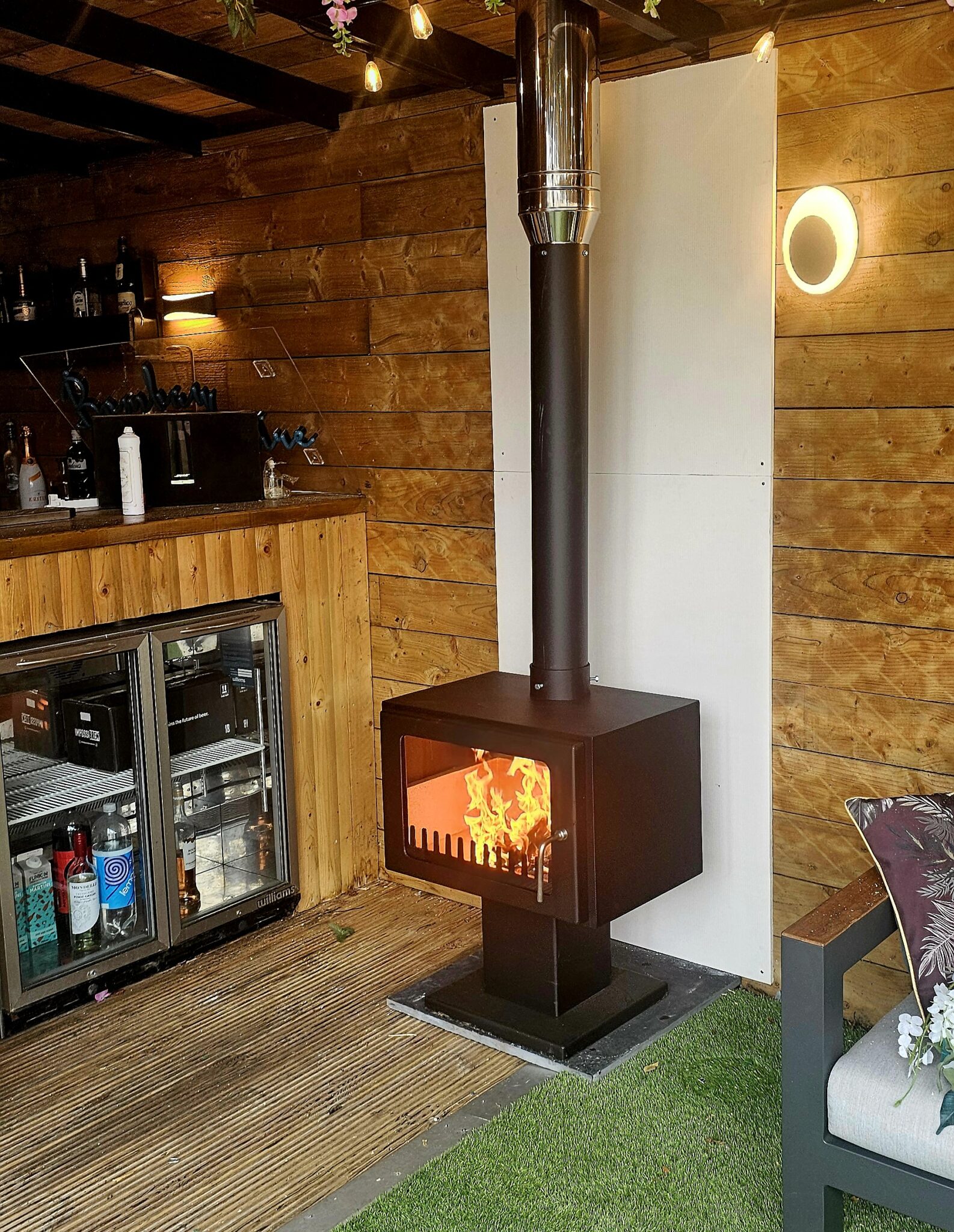
Fiesta Pergola and Gazebo Heater Kit
For a covered outdoor structure, the stove is only one part of the project. The flue route, roof penetration, support, clearances and weather sealing must also be considered.
Vesta also offers a configurable Fiesta Pergola Heater Kit for customers who need the outdoor stove and compatible flue components together.
Plan before purchasing
Important gazebo stove installation considerations
Do not select or install a combustion appliance from a general blog article alone. The proposed installation needs to be checked against the structure and the current product and flue instructions.
Non-combustible base
Plan a stable, suitable base or hearth around the selected appliance and its intended use.
Clearances and shielding
Keep the stove and flue away from timber, screens, furnishings and other combustible materials.
Ventilation
Never assume that a curtained or screened gazebo remains sufficiently ventilated for a combustion appliance.
Flue route
Roof exits, support brackets, insulated sections, weatherproofing and termination height need proper planning.
Local requirements
Rules can differ according to the structure, location and whether the flue serves a roofed or enclosed building.
Fuel and operation
Burn only suitable fuel permitted by the appliance instructions and operate the stove exactly as specified.
Get more useful heat
How to improve comfort inside a gazebo
Position seating within the radiant zone
In an open structure, placing people closer to the radiant face of the heater is often more effective than trying to warm all the surrounding air.
Reduce draughts without enclosing the appliance
Strategic screening can improve comfort, but it must not compromise ventilation or safe clearances.
Use suitable dry firewood
Store fuel correctly and use wood that meets the appliance instructions. Read our guide to choosing wood for an outdoor log burner .
Choose a heater for your actual usage
Match the heater to how often the gazebo is used, the length of each session and whether convenience or atmosphere is the main priority.
Common questions
Gazebo Heating FAQs
What is the most effective way to heat an open gazebo?
Radiant heat is usually the most useful approach because open sides allow warmed air to escape. An infrared heater provides instant spot heat, while an outdoor wood-burning stove can suit longer sessions where a real-fire focal point is wanted.
Can you put a wood-burning stove in a gazebo?
A purpose-built outdoor stove may be suitable for an appropriately designed open or ventilated gazebo. The stove position, base, clearances, ventilation and flue must be assessed for the individual structure.
Is an electric or wood-burning gazebo heater better?
Electric infrared heating is simpler when instant, occasional warmth is the priority. A wood-burning stove is better suited to customers who value longer sessions, off-grid operation, radiant heat and the atmosphere of a real fire.
Can a gazebo be enclosed while the stove is burning?
Do not add curtains, screens or solid panels around a combustion appliance without reassessing ventilation, clearances and the complete installation. A fully enclosed structure needs site-specific advice.
Do I need a flue through the gazebo roof?
The correct flue arrangement depends on the appliance, its position and the structure. A covered installation commonly requires a properly planned route, support, roof penetration and weathering system.
Which Vesta product should I start with?
Start with the Fiesta Garden Stove when you need the outdoor appliance. Review the Fiesta Pergola Heater Kit when compatible flue components are also required.
Continue your research
Gazebo Heating Products and Guides
Ready to explore the outdoor stove?
See Whether the Fiesta Is Right for Your Gazebo
Review the current product options or send Vesta photographs and dimensions of your gazebo for product and flue guidance.